
A diamond is far more than a stone — it is a reflection of who you are. Whether you are choosing the centrepiece for an engagement ring or adding a meaningful piece to your jewellery collection, the shape you select tells a story about your style, your values, and the moments you hold dear.
With so many different diamond cuts, shapes, and diamond types available, finding the right one can feel overwhelming. That is exactly why we created this diamond shape guide. At Fyne, we believe that education is a form of empowerment, and understanding the differences between diamond shapes and cuts — from sparkle and size appearance to price and durability — gives you the confidence to make a choice you will love for a lifetime.
Whether you are drawn to a timeless round brilliant, a sleek emerald cut, or something beautifully unconventional like a kite or hexagon shape, this guide covers every diamond shape in detail — from classic diamond cuts for rings to the rarest shapes of engagement rings — so you can find the perfect match for your personality, lifestyle, and budget.
What Are Diamond Shapes?
Diamond shape refers to the geometric outline of a diamond when viewed from above — it is the first thing you notice, the silhouette that defines the character of your ring or jewellery piece. When people search for "shapes of diamonds" or "types of diamond shapes," they are asking about this outline.
Diamond shapes fall into two broad categories. The round brilliant stands in a class of its own as the most traditional and widely recognised shape. Every other shape — oval, pear, emerald, cushion, marquise, princess, radiant, Asscher, and heart — falls under the umbrella of fancy shape diamonds. Each offers a distinct personality, from vintage romance to bold modern geometry.
Understanding different diamond shapes is one of the most important decisions you will make when selecting a piece of jewellery, because shape influences everything: how a diamond sparkles, how large it appears, how it sits on your finger, and how much it costs per carat.
How to Choose the Right Diamond Shape
With so many beautiful diamond shapes for engagement rings and wedding ring shapes available, how do you decide which one is right for you? Whether you are exploring diamond shapes for rings for the first time or narrowing down between two favourites, there is no single correct answer — but considering these five factors will help you find the best diamond shape for engagement ring designs and a diamond shape ring that feels truly yours.
Based on Budget
If budget is your primary consideration, fancy shapes offer the best value. The radiant and cushion also offer excellent value with impressive sparkle. Choosing a lab-grown diamond in any shape further maximises your budget, giving you a bigger, more beautiful stone for less.
Based on Finger Shape
Different diamond shapes complement different hand types:
-
Long, slender fingers suit virtually any shape, but round, princess, and Asscher cuts look particularly balanced.
-
Shorter fingers are beautifully elongated by oval, pear, and marquise shapes, which create the illusion of added length.
-
Wider fingers are flattered by elongated shapes (oval, pear, marquise, emerald) that create a slimming, lengthening effect.
That said, the best shape for your hand is the one you love most. These are guidelines, not rules.
Based on Personal Style: Modern vs Vintage
Your aesthetic preference is one of the strongest guides to choosing a shape:
-
Modern and minimalist: Emerald, Asscher, princess, radiant — clean lines and geometric precision.
-
Classic and timeless: Round brilliant — never goes out of style.
-
Romantic and vintage: Cushion, oval, pear — soft curves and warm sparkle.
-
Bold and distinctive: Marquise, heart, or unique shapes like kite or hexagon.
Based on Setting Type
Choosing the best diamond cut for engagement ring settings also depends on the style you prefer. Different diamond ring types and ring cuts pair naturally with certain settings:
-
Solitaire: Round, oval, emerald, cushion — shapes that speak for themselves.
-
Halo: Round, cushion, pear, oval — the border of smaller diamonds enhances the centre stone's presence.
-
Three-stone: Round, emerald, radiant, pear — shapes that create beautiful symmetry with side stones.
-
Bezel: Round, oval, marquise, pear — the metal surround protects vulnerable points beautifully.
Based on Lifestyle
If you lead an active lifestyle — whether you work with your hands, exercise regularly, or simply want a low-maintenance ring — durability should factor into your choice. Round, oval, cushion, and radiant cuts are the most resistant to everyday wear. Shapes with points (pear, marquise, princess, heart) are equally beautiful but benefit from protective settings to ensure avoid chipping at the points..
Diamond Shape vs Diamond Cut: What's the Difference?
One of the most frequently asked questions is: what is a diamond cut, and how does it differ from a diamond shape? These two terms are often used interchangeably, but they refer to different things.
-
Shape describes the outline or silhouette of the diamond — round, oval, square, pear, heart, and so on. It is what you see when you look at a diamond from above. When people ask about different cuts of diamonds or types of diamond cuts, they are often asking about shape.
-
Cut describes how the diamond's facets are arranged and angled. The cut determines how light enters, bounces around inside, and exits the stone — directly affecting its sparkle, brilliance, and fire. Two diamonds can share the same shape but look entirely different depending on how well they are cut.
Some terms describe both shape and cut style simultaneously. For example, "emerald cut" refers to both a rectangular shape and a specific step-cut facet pattern, while "princess cut" describes a square outline with a brilliant-cut arrangement.
In simple terms: shape is what the diamond looks like, and cut is what makes it shine.
Diamond Shape Chart: Side-by-Side Comparison
Choosing between different types of diamonds and diamond cut shapes becomes much easier when you can compare them at a glance. Our diamond cut chart below breaks down the key characteristics of every major diamond shape — from sparkle level and perceived size to average price per carat and durability. Use this diamond shapes chart and diamond shape comparison to understand each diamond shape name, its cut style, and what makes it unique.
|
Shape |
Cut Style |
Sparkle Level |
Avg. Price Per Carat (vs Round) |
Durability |
Looks Larger Than Carat Weight? |
|
Round Brilliant |
Brilliant |
★★★★★ |
Baseline (highest) |
Excellent — no exposed points |
No — compact face-up |
|
Oval |
Brilliant |
★★★★☆ |
Approximately 20–30% less |
Excellent — no exposed points |
Yes — elongated surface |
|
Pear |
Brilliant |
★★★★☆ |
20–30% less |
Good — pointed tip needs protection |
Yes — elongated teardrop |
|
Marquise |
Brilliant |
★★★★☆ |
Up to 20–35% less |
Moderate — two pointed ends |
Yes — largest face-up area per carat |
|
Princess |
Modified Brilliant |
★★★★☆ |
20–30% less |
Moderate — sharp corners need protection |
Slightly — square face-up |
|
Cushion |
Brilliant/Modified |
★★★½☆ |
25–35% less |
Excellent — rounded corners |
Slightly smaller — deeper proportions |
|
Emerald |
Step |
★★★☆☆ |
25–35% less |
Good — cropped corners |
Moderate — elongated but open table |
|
Radiant |
Mixed/Brilliant |
★★★★☆ |
25–35% less |
Excellent — bevelled corners |
Slightly — holds weight in pavilion |
|
Asscher |
Step |
★★★☆☆ |
25–35% less |
Good — bevelled corners |
Slightly smaller — deep pavilion |
|
Heart |
Brilliant |
★★★½☆ |
20–30% less |
Moderate — pointed tip |
Moderate — complex shape |
Round Brilliant Diamond
 The round brilliant cut is the most iconic and most popular diamond shape in the world, and for good reason. With 57 or 58 meticulously angled facets, it is engineered to capture and reflect the maximum amount of light, producing unmatched brilliance, fire, and scintillation. No other diamond shape sparkles quite like a round brilliant.
It is also the most timeless choice. Whether set as a classic solitaire or surrounded by a halo of smaller stones, the round brilliant has remained the top choice for engagement rings for over a century — and it shows no sign of fading.
Facet Structure and Cut Style
The round brilliant is a pure brilliant cut featuring 57 or 58 facets (58 if the tiny flat facet at the bottom, called the culet, is included). These facets are precisely calculated to maximise the stone's interaction with light — gathering it from above, bouncing it around internally, and reflecting it back to your eye as white light (brilliance) and rainbow-coloured flashes (fire).
The round brilliant is the only diamond shape that receives an official cut grade from major gemological laboratories, ranging from Excellent to Poor, which reflects the precision and craftsmanship of the cut. For the most spectacular sparkle, look for an Excellent or Ideal cut grade.
Sparkle and Light Performance
The round brilliant is the most sparkly diamond shape on the market. Its mirror-like reflective surface creates maximum light return, which is why it consistently outperforms every other shape in brilliance tests. The 58 facets work together to produce a breathtaking show of white light, fire, and contrast that is visible even from across a room.
Pros and Cons
Pros: Unmatched brilliance and sparkle. Timeless and versatile — suits every setting style. The most forgiving shape for masking inclusions and colour. Excellent durability with no exposed points or sharp edges. Strong resale value.
Cons: The most expensive shape per carat due to high demand and significant rough material waste during cutting. Its compact face-up area means it can appear smaller than elongated shapes of the same carat weight.
Price Premium Explained
The round brilliant's higher cost is driven by two factors. First, the cutting process wastes roughly 60% of the original rough crystal — more than any other shape. Second, it is the most sought-after shape globally, and high demand supports premium pricing. However, when you choose a lab-grown round brilliant, you enjoy the same extraordinary sparkle at a fraction of the price of an earth-mined stone.
Best Settings for Round Diamonds
The round brilliant is the most versatile of all diamond cuts for rings. It looks stunning in a classic solitaire — the Fyne signature — as well as in halo, pavé, three-stone, bezel, and vintage-inspired designs. Its symmetry and sparkle complement virtually any metal and ring style, making it the ultimate foundation for a curated, timeless jewellery collection. Among all engagement ring diamond cuts and diamond ring cuts, the round brilliant remains the most universally flattering.
Discover Your Perfect Round Brilliant — Shop Fyne's Bestselling Cut
Princess Cut Diamond
The princess cut is the most popular fancy shape diamond and a favourite for those who love clean lines with serious sparkle. Its bold, square silhouette gives it a modern, contemporary edge, while its brilliant-cut facet pattern delivers fire and scintillation that rivals the round brilliant.
Faceting Pattern
The princess cut is classified as a square modified brilliant, typically featuring between 50 and 58 chevron-shaped facets (the exact count varies depending on the cutting style) arranged to maximise light return. This facet arrangement is particularly effective at hiding inclusions — especially those located near the corners — making the princess cut a practical choice for those who want to prioritise size or sparkle over a higher clarity grade.
Sparkle Compared to Round
While the round brilliant remains the sparkle champion, the princess cut comes remarkably close. Its brilliant-style facets produce excellent fire and scintillation — the flashing, twinkling light you see when the diamond moves. The sparkle is less uniform than a round brilliant's but often more dynamic and eye-catching.
Pros and Cons
Pros: Exceptional sparkle in a modern, geometric shape. More affordable per carat than a round brilliant (retains more of the rough crystal during cutting). Hides inclusions well, particularly at the corners. Versatile in both contemporary and vintage settings.
Cons: The four sharp corners are vulnerable to chipping if not properly protected by the setting — V-prongs or bezel settings are recommended. Princess cuts may appear slightly smaller face-up than other square shapes like the Asscher, as they carry more weight in the pavilion.
Durability and Corner Protection
The princess cut's pointed corners are its most delicate feature. Without proper protection, the corners can chip from everyday wear. This is easily addressed by choosing a setting with V-prongs that cup each corner, or a full bezel setting that encases the diamond entirely. With the right setting, a princess cut is a durable and practical choice for daily wear.
Cushion Cut Diamond

The cushion cut is one of the oldest diamond shapes still in wide use today, beloved for its soft, romantic character and warm, fiery light. Somewhere between a round and a square, its gently rounded corners and pillow-like silhouette have earned it the traditional nickname "pillow-cut diamond."
Old Mine vs Modern Cushion
The cushion cut has evolved significantly over the centuries. Its ancestor, the old mine cut, was hand-cut in the 18th and 19th centuries with a high crown, small table, and broad facets designed to sparkle under candlelight. Modern cushion cuts retain the shape's romantic outline but are precision-engineered for far greater brilliance.
Today's cushion cuts come in two main styles. Brilliant cushion cuts feature larger facets that emphasise clarity with a softer, more traditional sparkle. Modified brilliant cushion cuts include additional facets that maximise brilliance and create a "crushed ice" effect — similar to what you see in radiant cuts. No two cushion cuts look exactly the same, giving each stone a truly individual character.
Sparkle Variations
Cushion-cut diamonds are known for their fiery flashes of reflected rainbow-coloured light, rather than the intense white brilliance of a round cut. This gives them a warmer, more romantic glow that many find deeply appealing. The rounded edges soften the stone's overall appearance, creating a look that is both classic and contemporary.
Elongated vs Square Cushion
Cushion cuts come in a range of proportions, from perfectly square to noticeably elongated. A square cushion offers a compact, symmetrical look, while an elongated cushion creates a flattering, finger-lengthening effect similar to an oval. The variety of length-to-width ratios available makes the cushion cut one of the most versatile shapes for any ring design.
|
Style |
L:W Ratio |
Notes |
|
Square |
1.00 – 1.05 |
Classic, perfectly symmetrical; most common request |
|
Near-square |
1.05 – 1.10 |
Subtle elongation, still reads as square to most eyes |
|
Slightly elongated |
1.10 – 1.20 |
Versatile sweet spot; flatters most finger widths |
|
Elongated |
1.20 – 1.30 |
Visible elongation; finger-lengthening effect begins here |
|
Very elongated |
1.30+ |
Closest to an oval silhouette; bold, fashion-forward look |
Emerald Cut Diamond

The emerald cut is a study in understated sophistication. Its clean, architectural lines and signature "hall of mirrors" effect make it one of the most elegant and distinctive diamond shapes — a favourite among those who value refined beauty over maximum sparkle.
Step Cut Characteristics
The emerald cut is a classic step cut, featuring long, rectangular facets arranged in concentric rows. Rather than the fiery sparkle of a brilliant cut, these broad, mirror-like facets produce mesmerising flashes of light and dark — creating the emerald cut's iconic hall-of-mirrors gleam. The shape's cropped corners add structural interest and improve durability.
Despite its name, the emerald cut was not created for diamonds originally. It was developed for emerald gemstones, designed to reduce pressure during cutting and prevent chipping. Its elegant, rectangular silhouette has since become a timeless choice for diamonds, particularly among those drawn to Art Deco-inspired and vintage aesthetics.
Clarity Considerations
Because of the emerald cut's large, open table and broad facets, inclusions and colour are more visible than in brilliant-cut shapes. This is part of the shape's beauty — it invites you to look deep into the stone — but it does mean that emerald cuts are best suited to diamonds with higher clarity and colour grades. For the most eye-clean appearance, opt for a clarity grade of VS2 or above, and a colour grade of G or higher.
Hall-of-Mirrors Effect
The emerald cut's defining visual characteristic is its dramatic, layered reflections of light. As you move the stone, broad panels of brightness alternate with darker areas in a hypnotic, geometric pattern. This "hall of mirrors" is what sets the emerald cut apart from every other shape and gives it an air of quiet, confident luxury.
Oval Cut Diamond

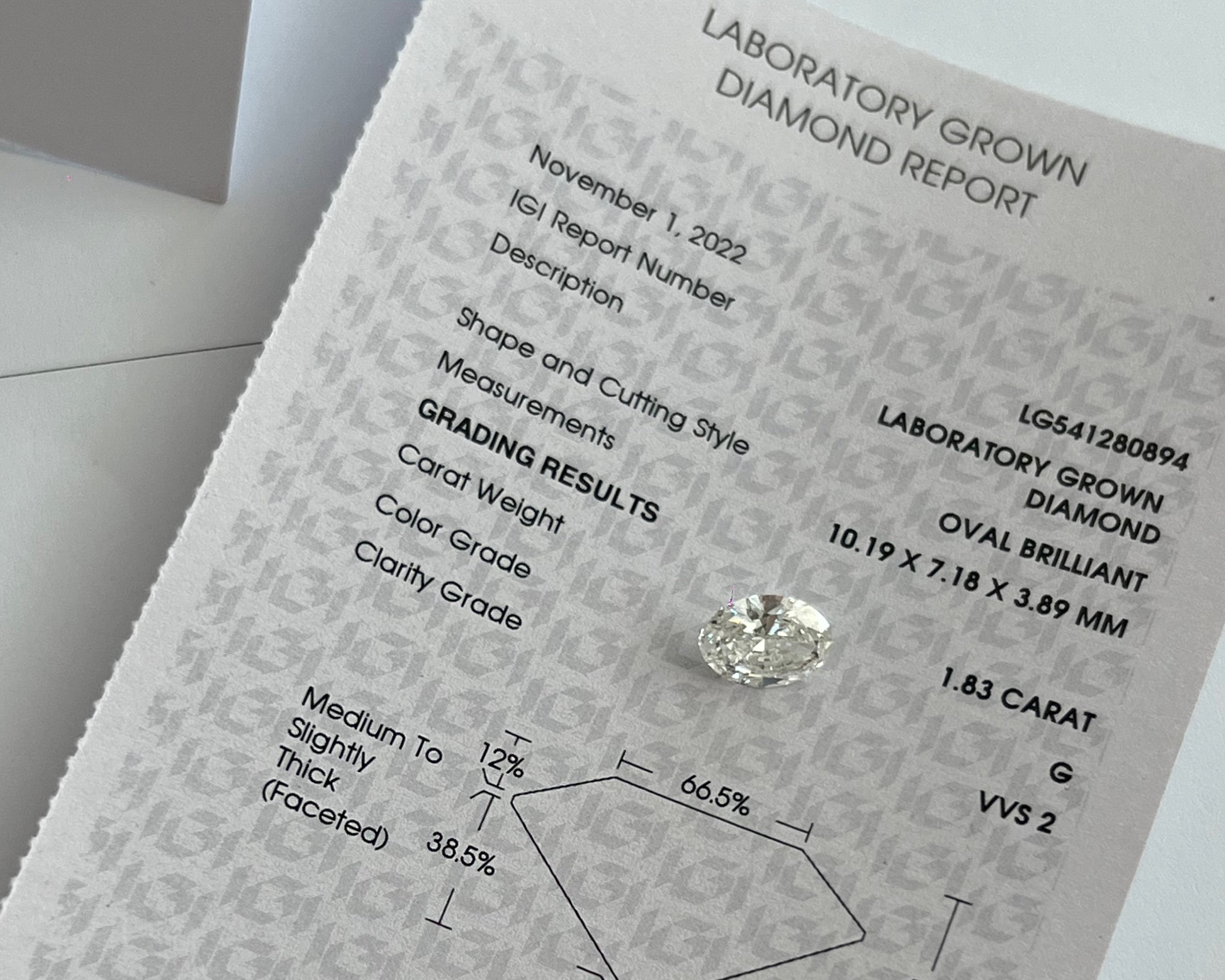
The oval-cut diamond is the perfect blend of tradition and individuality. It offers the brilliant sparkle of a round diamond in a graceful, elongated form that flatters the finger and creates the illusion of greater size — all at a lower price per carat.
The oval has experienced a dramatic surge in popularity in recent years, becoming one of the most sought-after diamond shapes for engagement rings worldwide. It is easy to see why: it combines classic brilliance with a modern, distinctive silhouette.
Elongation and Finger-Flattering Effect
One of the oval's greatest strengths is its ability to elongate the finger, creating a slender, elegant appearance. This flattering effect makes it a universally beautiful choice regardless of hand shape or finger length. Most oval diamonds have a length-to-width ratio between 1.3:1 and 1.4:1, which is considered the ideal range for balancing elegance with proportion.
Bow-Tie Effect Explained
A key consideration when choosing an oval diamond is the bow-tie effect (also called the bow tie effect) — a dark, bow-tie-shaped shadow that can appear across the centre of the stone. This occurs in most elongated brilliant cuts (ovals, pears, and marquises) and is caused by facets that fail to reflect light back to the viewer at certain angles.
In a well-cut oval, the bow-tie is minimal and barely noticeable, adding subtle depth to the stone's appearance. In a poorly cut oval, it can be large and distracting. This is why it is essential to examine each oval diamond individually — and why working with a knowledgeable jeweller matters.
Price vs Round Comparison
Oval diamonds typically cost approximately 20–30% less per carat than round brilliants with comparable 4C specifications. Combined with their elongated shape (which makes them appear larger face-up), ovals offer one of the best value propositions of any diamond shape.
Browse our oval diamond collection here.
Pear-Shaped Diamond

The pear or teardrop cut is a beautifully distinctive shape that combines the brilliance of a round diamond with the dramatic flair of a marquise. Its striking silhouette — one rounded end tapering to a single point — creates a statement piece that is both elegant and eye-catching.
Once considered a more unconventional choice, the pear shaped diamond has made a fashionable comeback in recent years and is now one of the most popular diamond shapes for unique engagement rings.
Teardrop Structure
The pear cut's teardrop silhouette is created by blending a round brilliant half with a marquise half, resulting in a shape that is both graceful and bold. Cut with brilliant-style facets, it delivers exceptional sparkle and fire — rivalling the round brilliant in light performance while offering a dramatically different aesthetic.
Like the oval, the pear shape flatters the finger by creating an elongating effect, making it universally flattering. It can be worn with the point facing the fingertip for a classic, slimming look, or with the point facing the knuckle for a more contemporary style.
Best Length-to-Width Ratio
Pear-shaped diamonds come in a range of proportions, and your choice of length to width ratio is a matter of personal preference. Most fall between 1.3:1 and 1.4:1, which provides a balanced, classic teardrop. Shorter ratios can make the stone look off-round, while longer, more slender ratios create a dramatic, statement-making silhouette. Symmetry is essential — both sides of the pear should mirror each other precisely.
Which Direction to Wear It?
One of the unique charms of the pear shape is its versatility in how it is worn. The most traditional orientation places the point facing the fingertip, which enhances the finger-elongating effect. Some prefer to wear the point towards the knuckle for a bolder, more unconventional look. East-west settings, where the pear sits horizontally across the finger, offer a striking contemporary twist. There is no wrong answer — it is entirely a matter of your personal style.
A note on durability: The pear cut's pointed tip is its most delicate area and is more susceptible to chipping than the rounded end. A secure setting — such as a V-prong or bezel at the point — is essential to protect it during everyday wear.
Discover our pear-shaped diamond collection!
Marquise Cut Diamond

The marquise cut is a bold, dramatic shape with a rich history and an unmistakable silhouette. Also known as the "navette" (French for "little ship"), the marquise was originally commissioned by King Louis XV of France, who wanted a diamond shaped to resemble the perfectly formed lips of his mistress, Madame de Pompadour.
With its long, narrow, eye-shaped profile and two pointed ends, the marquise cut is a vintage-inspired choice that remains timelessly elegant — perfect for those who appreciate history, romance, and a diamond that commands attention.
Maximising Carat Appearance
The marquise cut has the largest face-up surface area of any diamond shape per carat weight. This means a one-carat marquise diamond will appear significantly larger than a one-carat round, oval, or cushion diamond. If maximising the visual presence of your diamond is a priority, the marquise is an exceptional choice — and at a lower price per carat than a round brilliant.
Vintage Appeal
The marquise cut carries an undeniable sense of old-world glamour and sophistication. Its elongated form and pointed ends evoke the elegance of a bygone era, making it ideal for vintage-inspired and Art Deco ring designs. Despite its historical roots, the marquise looks equally striking in modern, minimalist settings — a single marquise in a sleek solitaire is a powerful statement of understated confidence.
Durability Considerations
The marquise cut's two pointed ends are its most vulnerable areas. Like the pear shape, these points are susceptible to chipping from everyday wear if not properly protected. V-prongs or protective guards at each end are essential. Due to its elongated shape, symmetry is also critical — uneven sides or misaligned points will be highly visible and can affect the stone's overall brilliance. Choose carefully and examine the stone closely.
Explore our marquise diamonds here.
Asscher Cut Diamond
The Asscher cut is a distinctive, vintage-inspired square diamond that exudes geometric elegance and Art Deco charm. Developed in the early 1900s by the Royal Asscher Diamond Company in Amsterdam, this shape rose to prominence during the Art Deco era and remains a favourite among those who appreciate bold architectural beauty.
Art Deco Origins
The Asscher cut was one of the first patented diamond cuts, and its design reflects the clean geometry, bold lines, and symmetrical patterns that defined Art Deco style. Its square shape with deeply bevelled corners can sometimes give it an almost octagonal appearance — a distinctive visual signature that sets it apart from the emerald cut, to which it is often compared.
Clarity Visibility
Like the emerald cut, the Asscher is a step cut with large, open facets that reveal the interior of the stone. This means inclusions and body colour are more visible in an Asscher than in a brilliant-cut diamond. For the best visual result, choose an Asscher with high clarity (VS2 or above) and colour (G or better) grades. Many Asscher diamonds also display a distinctive "X" pattern when viewed from above, adding to their geometric intrigue.
Square Step-Cut Geometry
The Asscher's defining characteristic is its deep pavilion and layered step-cut facets, which draw the eye inward and create a mesmerising, concentric pattern of light and dark. When well-cut, the Asscher produces the same hall-of-mirrors effect as the emerald cut, but in a more compact, symmetrical form. It is a diamond that rewards contemplation — the more you look, the more you see.
Radiant Cut Diamond

The radiant cut is the best of both worlds: the clean, geometric lines of an emerald cut combined with the dazzling sparkle of a brilliant cut. It is the most modern cut on the market and an excellent choice for those who want a rectangular or square diamond that truly shines.
Hybrid Brilliant Structure
The radiant cut features an impressive number of facets — typically 70 — more than any other rectangular shape, arranged in a brilliant-cut pattern within an emerald-cut outline. This hybrid structure is what gives the radiant its intense sparkle and characteristic "crushed ice" appearance. The facet pattern also helps mask inclusions and warm colour tones, making the radiant a forgiving and practical choice.
Sparkle vs Emerald
While the emerald cut is valued for its understated, architectural gleam, the radiant cut delivers dramatically more sparkle. If you love the clean lines and rectangular silhouette of an emerald cut but want significantly more brilliance, the radiant is your shape. Think of it as an emerald cut turned up to full brightness.
Modern Appeal
The radiant cut's bevelled corners improve both its durability and its visual softness, making it a strong choice for everyday wear. It is also one of the most affordable rectangular shapes per carat, as its cutting process produces less waste than a round brilliant. Only 2% of all diamonds sold are radiant cuts, making it a distinctive and unique choice for those who want to stand apart.
Heart-Shaped Diamond
The heart shaped diamond is the ultimate symbol of love and romance. Bold, sentimental, and undeniably eye-catching, it is a deeply personal choice that carries powerful emotional meaning.
Symmetry Requirements
Creating a beautiful heart-shaped diamond requires exceptional cutting skill. Both halves of the heart must be perfectly symmetrical, with evenly matched lobes (the two rounded curves at the top), a well-defined cleft (the V-shaped notch between the lobes), and a clean, pointed tip at the bottom. Even slight asymmetry becomes immediately noticeable, so precision is paramount.
Ideal Carat Size for Definition
Heart-shaped diamonds need sufficient size for their shape to be clearly visible and recognisable. Below approximately 0.50 carats, the distinctive heart silhouette becomes difficult to distinguish, and the stone can look more like a rounded triangle. For the shape to truly shine, a size of 0.50 carats or above is recommended — the larger the stone, the more defined and impactful the heart shape becomes.
Romantic Symbolism
No diamond shape carries as much emotional symbolism as the heart. It is the shape of love itself — a declaration of deep affection and devotion. While less common than rounds or ovals, the heart shape engagement ring is cherished by romantics and sentimentalists who want their jewellery to carry unmistakable meaning. It is a beautiful choice for engagement rings, anniversary pieces, or any jewellery that celebrates a love story.
Most Affordable Diamond Shapes
Your choice of diamond shape can significantly affect how much you spend — and how much diamond you get for your budget.
Why Round Costs More
The round brilliant is consistently the most expensive diamond shape per carat, for two straightforward reasons. Its cutting process produces the most waste (up to 60% of the original rough crystal is lost), driving up manufacturing costs. And because it is the most popular and sought-after shape, market demand keeps prices high.
Best Budget-Friendly Shapes
If you want to maximise size and sparkle while being mindful of your budget, fancy shapes offer outstanding value:
Best overall value: The marquise, pear, and oval shapes offer the strongest combination of perceived size and lower cost — appearing significantly larger than a round diamond while typically costing 20–35% less per carat.
Best sparkle for less: The radiant and princess cuts deliver excellent brilliance at a lower price point than rounds, with the radiant's 70 facets producing sparkle that rivals the most expensive shapes.
Classic look for less: The cushion cut offers a timeless, romantic aesthetic at a lower cost per carat — perfect for those who love a vintage feel without the round brilliant price tag.
With lab-grown diamonds, these savings multiply. Our lab-grown diamonds are chemically and physically identical to earth-mined stones, offering the same brilliance and beauty at a price that makes larger, more impressive diamonds accessible to more people. It's worth noting that with lab-grown diamonds, the difference in price between shapes is almost negligible — giving you the freedom to choose your preferred cut purely based on style, without compromise.
Most Durable Diamond Shapes
While all diamonds are the hardest natural material on earth, not all diamond shapes are equally resistant to damage. The shape's outline — specifically whether it has exposed points, sharp corners, or rounded edges — determines how susceptible it is to chipping.
Corner Vulnerability Ranking
Most durable (rounded/bevelled edges):
-
Round Brilliant — no points, no corners, maximum durability
-
Oval — smooth, rounded outline with no vulnerable areas
-
Cushion — softly rounded corners absorb impact
-
Radiant — bevelled corners provide excellent chip resistance
Moderate durability (protected points):
-
Emerald — cropped corners reduce vulnerability
-
Asscher — bevelled corners, though the deeper cut can create stress points
Requires protective settings (exposed points):
-
Pear — single pointed tip needs V-prong or bezel protection
-
Heart — pointed tip and cleft need careful setting
-
Marquise — two exposed points require V-prongs at both ends
-
Princess — four sharp corners need V-prong or bezel protection
Best Shapes for Everyday Wear
If your ring will be on your finger day in and day out — and at Fyne, we design our pieces to be lived in — the most practical choices are the round brilliant, oval, cushion, and radiant. These shapes combine excellent durability with low maintenance, standing up beautifully to the demands of daily life.
For shapes with points or sharp corners (pear, marquise, princess, heart), the right setting makes all the difference. V-prongs, bezel settings, or halo surrounds protect the most vulnerable areas, allowing you to wear any shape confidently every day.
Diamond Shapes in Lab-Grown vs Natural Diamonds
One of the most common questions we receive at Fyne is whether lab grown diamonds differ from earth-mined diamonds when it comes to shape. The short answer: they do not. Lab grown diamond options are chemically and physically identical to earth-mined diamonds — same crystal structure, same hardness, same optical properties. The only difference is their origin.
Price Differences by Shape
Lab-grown diamonds cost significantly less than earth-mined diamonds across every shape. This means that a shape-and-size combination that might be out of reach in an earth-mined stone becomes beautifully accessible in a lab-grown diamond.
At Fyne, we use high-calibre lab-grown diamonds sourced from transparent suppliers, some of whom use renewable and recycled energy in the growing process. Sustainability is central to our mission — our materials are procured from companies that use renewable energy sources, and some of our suppliers are carbon neutral.
Availability Differences
Lab-grown diamonds are available in every shape and size. In fact, because lab-grown production can be more precisely controlled, certain rare shapes and exceptional color and clarity combinations may be more readily available in lab-grown than in earth-mined diamonds. Whether you want a classic round solitaire or a unique kite-cut centrepiece, the full spectrum of lab grown diamond shapes is at your disposal.
Do Sparkle Differences Exist?
No. A lab-grown diamond and an earth-mined diamond of the same shape, cut quality, clarity, and colour will sparkle identically. Brilliance, fire, and scintillation are determined by the diamond's cut and facet structure — not by how or where the crystal was formed. When you choose a Fyne lab-grown diamond, you are choosing the same breathtaking sparkle with a lower environmental footprint and a clear conscience.
Lab-grown diamonds are not just a material — they are a mindset. They represent a choice to respect wildlife and communities usually displaced by diamond mining, to eliminate the human rights concerns associated with the earth-mined diamond trade, and to preserve our planet for present and future generations.
Rare and Unique Diamond Shapes
Beyond the ten classic shapes, a growing number of rare diamond shapes and distinctive cuts offer something truly different for those who want their jewellery to be one of a kind.
Trillion Cut
The trillion (or trilliant) cut is a striking triangular diamond with three equal sides. Bold, geometric, and undeniably modern, it makes a powerful statement as a centre stone or adds structural interest as a side stone. Its broad, flat surface makes it appear larger per carat than many traditional shapes, though its three points do require protective settings.
Hexagon Cut
The hexagon cut offers a fresh, contemporary take on diamond design. With six sides and a distinctly geometric silhouette, it breaks entirely from traditional shapes. Hexagon diamonds are perfect for those seeking a truly one-of-a-kind engagement ring that reflects a creative, independent spirit. They look particularly stunning in minimalist, bezel-set designs.
Kite Cut
The kite cut features four sides of different lengths arranged in a distinctive diamond-like (but asymmetrical) silhouette. Each kite-cut stone is unique, with differently sized edges and points. This makes it a favourite for those who want a non-traditional ring that cannot be mistaken for anyone else's. Dramatic and individual, the kite cut is for the bold and the brave.
Shield Cut
Resembling a heraldic crest, the shield cut is a geometric shape that balances strength and elegance. Its flat facets and angular lines give it an architectural quality that works beautifully as a solitaire or as part of a multi-stone design. It is a rare choice that carries a sense of distinction and heritage.
Discover our Pleated Elegance collection, featuring an array of stunning shield cuts.
Elongated Cushion
An updated take on the classic cushion cut, the elongated cushion stretches the pillow-like silhouette into a more rectangular form. This creates a flattering, finger-lengthening effect while preserving the cushion's signature soft corners and romantic character. It is ideal for those who love the warmth of a cushion cut but want a more modern, contemporary look.
Diamond Shapes FAQ
What is the most popular diamond shape? The round brilliant is the most popular diamond shape worldwide, accounting for the majority of engagement ring sales. Its unmatched sparkle, timeless appeal, and versatility in any setting make it the enduring favourite among all popular diamond cuts. However, the oval cut has surged dramatically in popularity and is now a close second in many markets.
What shape diamond sparkles the most? What diamond shape sparkles the most is one of the questions we hear most often. The round brilliant cut sparkles the most of any diamond shape. Its 57–58 facets are precisely engineered to maximise light return, producing the highest levels of brilliance, fire, and scintillation. Among fancy shapes, the radiant cut (with typically 70 facets) and the oval cut are the next most brilliant.
Which diamond shape is cheapest? The cheapest diamond shape per carat is typically the marquise, pear, or oval, because their cutting process retains more of the rough crystal and they are less in demand than round brilliants. The cheapest diamond cut will always depend on current market conditions, but the radiant and cushion cuts also offer excellent value. Choosing a lab-grown diamond in any shape further reduces cost without sacrificing quality.
What is a fancy shape diamond? A fancy shape diamond is any diamond that is not a round brilliant. This includes oval, pear, emerald, cushion, marquise, princess, radiant, Asscher, heart, and all unique shapes such as trillion, kite, and hexagon. Fancy shapes offer distinctive aesthetics and are generally more affordable per carat than rounds.
Which diamond shape looks biggest? The marquise has the largest face-up area of any diamond shape, making it appear the biggest per carat weight. The pear and oval shapes also appear noticeably larger than a round diamond of the same weight because their elongated forms spread carat weight across a wider surface area.
Is oval better than round? Neither is objectively better — it depends on your priorities. The round brilliant offers maximum sparkle and is the most traditional choice. The oval appears larger per carat, typically costs less, and creates a flattering, finger-elongating effect. Both are brilliant-cut shapes with exceptional light performance.
Does shape affect diamond value? Yes. The round brilliant commands the highest price per carat due to its popularity and the waste involved in its cutting process. Fancy shapes (oval, pear, cushion, emerald, marquise, radiant, princess, Asscher, heart) cost less per carat and often provide better value for size and visual impact.
What diamond shape is best for small hands? Elongated shapes such as the oval, pear, and marquise create a lengthening effect that flatters smaller hands and shorter fingers. These shapes make the diamond appear larger and the finger more slender, creating a beautifully proportioned look. The best diamond shape for your hand is ultimately the one that brings you the most joy.
What diamond shape hides inclusions best? Brilliant-cut shapes are the most forgiving when it comes to masking inclusions. The round brilliant, oval, pear, and radiant cuts are particularly effective because their many small, angled facets create enough sparkle and visual complexity to make minor inclusions virtually invisible.
Which diamond shape is most durable? The round brilliant is the most durable diamond shape because it has no points, corners, or edges that are vulnerable to chipping. The oval and cushion cuts are also excellent choices for diamond durability. Shapes with exposed points — pear, marquise, princess, and heart — are equally hard but require protective settings to guard against damage.
What are the different diamond cuts? The main diamond cuts names include the round brilliant, oval, pear, marquise, princess, cushion, emerald, radiant, Asscher, and heart. Each diamond cut type offers a distinct combination of sparkle, size appearance, and price. Beyond these ten classic cuts of diamonds, rarer shapes such as trillion, hexagon, kite, and shield offer something truly unique.