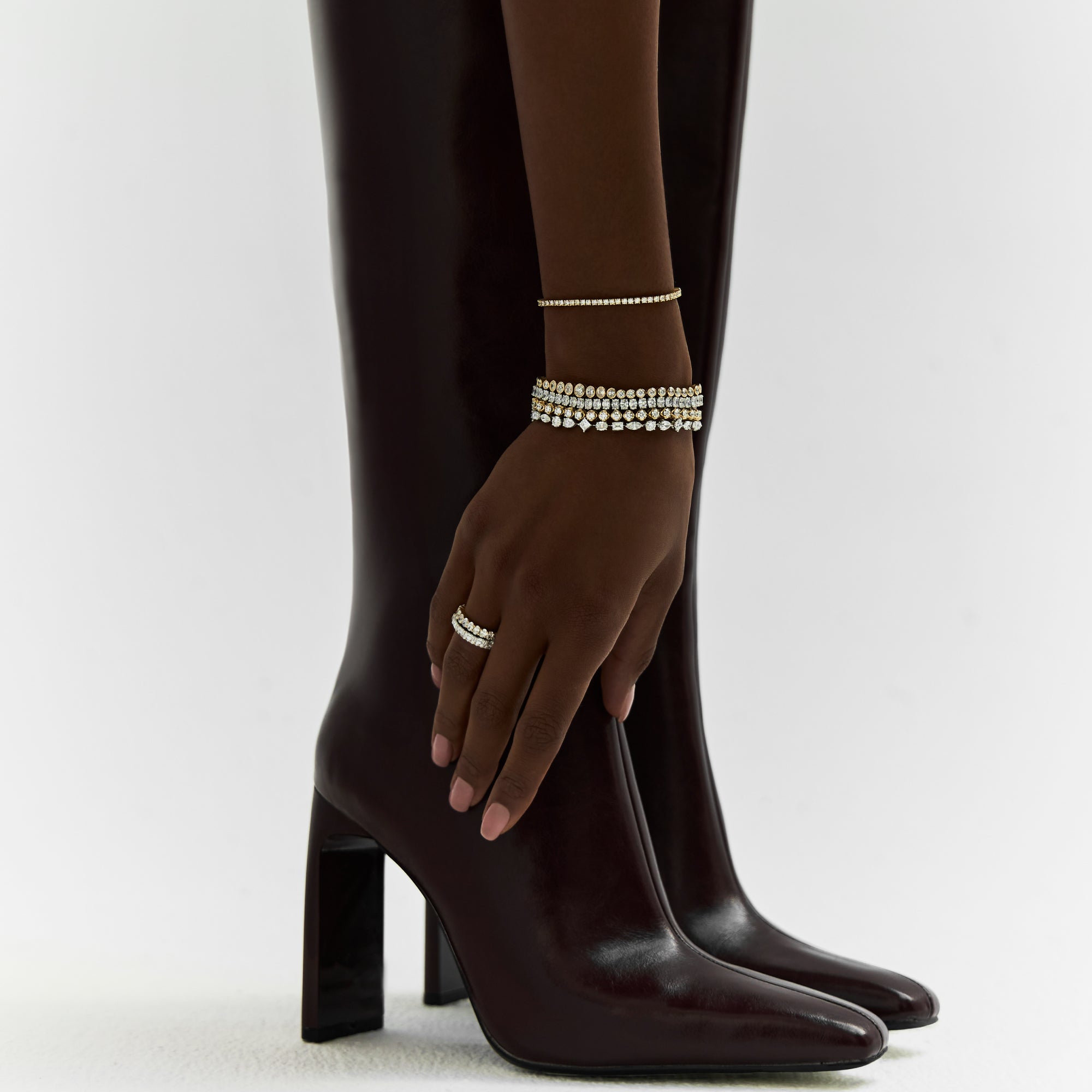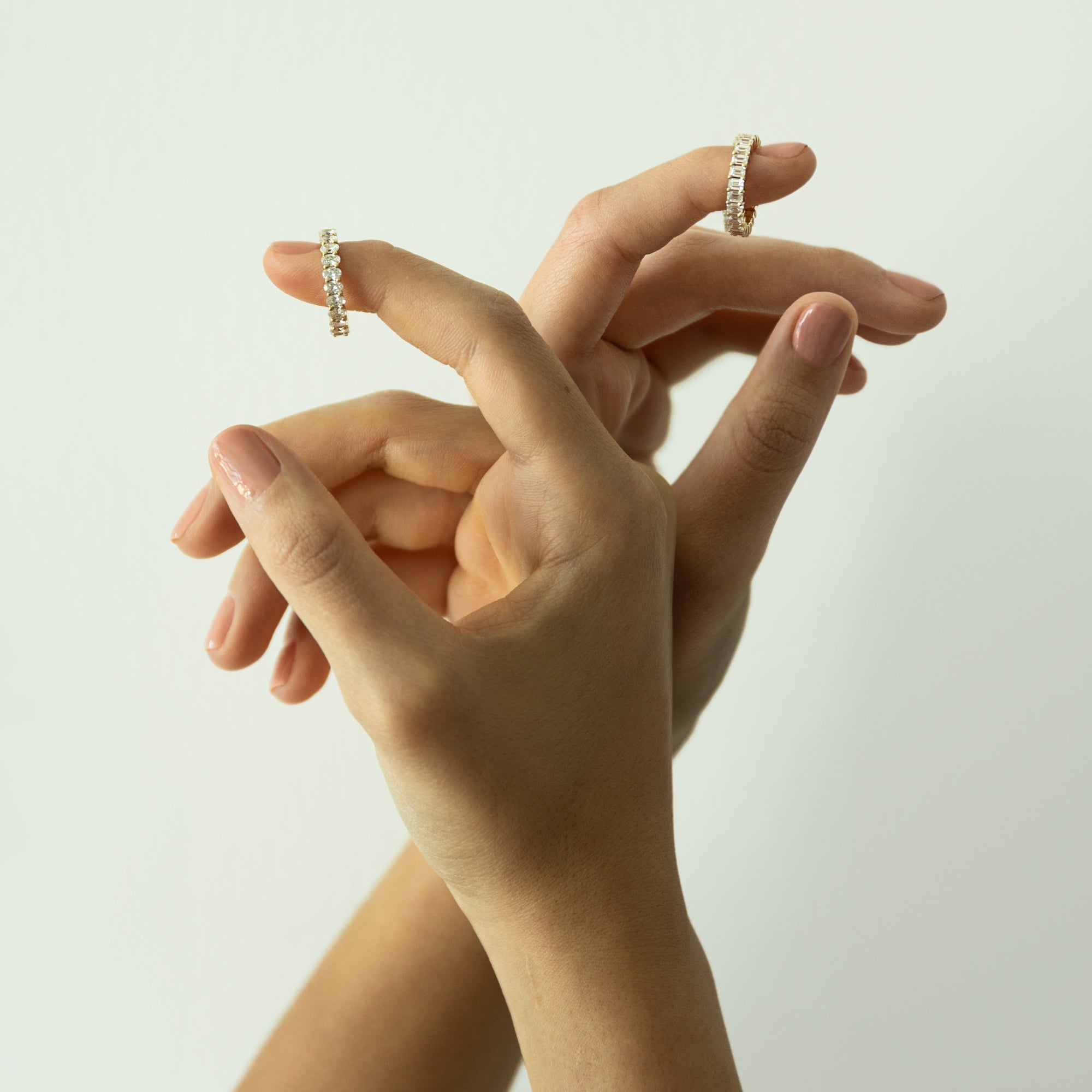

Diamonds have long stood for permanence, love, and quiet status. That value is exactly why imitations exist, and why so many people end up holding a stone they can’t quite vouch for — an inherited ring, an auction find, a gift with no paperwork. The good news is that a real diamond behaves in ways a simulant cannot fully copy, and most of those behaviours can be observed at home with nothing more than a glass of water, a torch, and a little patience.
This guide walks through eleven tests, from the simple to the professional. Before the tests, one point worth settling early: a lab-grown diamond is a real diamond. It is chemically and optically identical to a mined one, so it passes every test below. The stones that fail are simulants — cubic zirconia, moissanite, white sapphire, white topaz — which only imitate a diamond’s look. Keep that distinction in mind and the tests make far more sense.

What Makes a Diamond a Diamond
A diamond has a precise set of physical properties, and almost every authenticity test is really a way of checking one of them. Knowing the numbers helps you understand what each test is looking for.
Refractive index — 2.417. Light bends sharply as it passes through a diamond, which is the root of its brilliance.
Dispersion — 0.044. This governs “fire,” the coloured flashes a diamond throws.
Specific gravity — 3.52. A measure of density, used in the water and weight tests.
Hardness — 10 on the Mohs scale, the hardest known natural material.
Thermal conductivity — the highest of any substance, which is what most electronic testers measure.
A diamond is also singly refractive, meaning light travels through it along a single path rather than splitting in two. One thing to hold on to throughout: these properties are identical for lab-grown and mined diamonds, so every test described here works the same way on both. A test tells you whether a stone is a diamond, not where it grew.
How to Tell if a Diamond is Real at Home
You won’t get a laboratory verdict from your kitchen table, but several at-home checks are genuinely useful, especially when two or three of them point the same way. Work with a loose stone where possible, handle it carefully, and treat the results as indications rather than proof.
1. The Water Test
Fill a glass about three-quarters with water and gently drop the loose stone in. Because a diamond is dense, it should sink quickly to the bottom. A lightweight glass or plastic imitation will float or hover near the surface. The test has limits — cubic zirconia is actually denser than diamond and will also sink — so treat sinking as a pass for “not a cheap fake,” not as confirmation. This one needs a loose stone; a mounted diamond won’t give a clean result.
2. The Fog Test
Hold the stone between two fingers and breathe on it as you would a mirror. A diamond disperses heat so efficiently that the fog clears almost instantly. If the misting lingers for a couple of seconds, the stone is conducting heat poorly and is likely a simulant. Moissanite is the exception worth flagging — it can clear quickly too, so the fog test alone won’t separate a diamond from moissanite.
3. The Dot & Read-Through Test
Draw a small dot on a sheet of white paper, then place the stone flat-side down directly over it and look straight down through the point. A diamond bends light so strongly in different directions that you should not be able to see the dot through it. If the dot — or a line of newspaper text under the stone — reads clearly, the stone is letting light pass too directly to be a diamond. As with the water test, this works on loose stones rather than mounted ones.
4. The Sparkle Test
Look at how the stone handles ordinary room light. A diamond returns a distinctive mix of bright white light, known as brilliance, and smaller flashes of colour, known as fire. The balance matters: a diamond leans white with hints of rainbow, while many simulants throw excessive, almost disco-like colour. Cubic zirconia tends to look glassy and over-coloured; a diamond’s sparkle is sharper and more contained.
5. The Flashlight Test
Hold a torch — a phone light works well — and shine it directly at the stone in a dim room, watching the reflections. A diamond reflects crisp white light strongly and scatters tight rainbow flashes around it. A simulant usually returns softer, hazier light, or tips the other way into heavy rainbow with little white brilliance. Turning the stone slowly under the beam makes the difference easier to read, and it’s one of the quickest checks you can do.
6. The Sunlight Test
Take the stone into natural daylight and watch how it disperses light as you tilt it. A diamond shows more white sparkle than coloured sparkle, with fire appearing as brief, well-defined flashes. A stone that produces a constant, vivid rainbow in sunlight is showing more dispersion than a diamond has, which points towards moissanite or cubic zirconia. Daylight is a useful second option to the flashlight test because the light source is even and unbiased.
7. The Setting & Hallmark Check
If the stone is mounted, the setting tells its own story. A real diamond is usually held in a quality metal, so look inside the band for hallmarks: 10K, 14K or 18K, or the number 750, all indicate gold, while PT, Plat or 950 indicate platinum. A genuine stone set in base metal is unusual and worth questioning. A C.Z. stamp is a direct admission that the stone is cubic zirconia. The setting won’t authenticate the stone on its own, but a precious-metal mount is a reassuring sign that someone treated it as worth protecting.
8. The UV / Fluorescence Test
Hold the stone under a UV or blacklight and watch for a glow. Many — though not all — diamonds fluoresce a soft blue under ultraviolet light. Most lab-grown diamonds do not fluoresce, although some can. A blue glow is a mild point in favour of a diamond, while some simulants glow a different colour or not at all. This test is firmly indicative rather than conclusive: a large share of genuine diamonds show no fluorescence whatsoever, so a non-glowing stone proves nothing by itself. Use it as one more data point alongside the others.

At-Home Tests With Limitations
Two tests deserve their own heading because they are widely repeated online yet easy to misread. They can mislead more than they confirm.
9. The Scratch Test (and Why It Fails)
The old advice was to scrape a stone against glass or a mirror on the logic that only a diamond is hard enough to scratch it. The problem is that simulants are hard too — moissanite and cubic zirconia will both scratch glass — so a positive result tells you very little. Worse, the test risks damaging the stone, the mirror, or both. There are better, gentler checks on this list, so this is one to know about and then skip.
10. The Heat / Thermal Conductivity Test
A diamond draws heat away faster than almost anything, which is the principle behind the handheld “diamond tester” you may have seen a jeweller use. Warm the stone and a diamond will shed that heat almost immediately. The catch is moissanite, which conducts heat much like a diamond and will pass a basic thermal check. This is precisely why professionals pair a thermal probe with an electrical-conductivity test, which is where the next test comes in.
Professional Diamond Verification
At-home tests narrow the field; they rarely close it. For a stone of real sentimental or financial value — and certainly before any resale or insurance decision — a trained gemmologist is the only route to certainty.
11. Loupe, Magnification & Electrical Conductivity
A gemmologist begins with a jeweller’s loupe, a small magnifier, looking for the tiny inclusions and surface marks that natural and lab-grown diamonds almost always carry. Flawless perfection, ironically, often signals a simulant. Under higher magnification, sometimes up to 1200x, those internal characteristics become unmistakable. To separate a diamond from moissanite, the gemmologist adds an electrical-conductivity test: a diamond conducts electricity quite differently from moissanite, which resolves the one case the thermal test leaves open. A precise scale and a specific-gravity measurement can confirm density.
Grading Reports & Certification
The most durable answer to “is this real?” is a grading report from an independent laboratory. GIA, IGI and AGS are the names that carry weight, and IGI in particular is well established for lab-grown diamonds and widely recognised across the Middle East. A report documents a stone’s carat, colour, clarity and cut, and confirms whether it is natural or lab-grown — paperwork that matters for insurance and resale as much as peace of mind. Every Fyne engagement ring arrives with an IGI certificate, and our bespoke pieces can be sourced with a GIA report on request, so the question of authenticity is answered before the ring ever reaches you. If you’d like the detail, our complete guide to diamond certification explains what each report covers.
Real vs Fake Diamond: A Quick Comparison
The simulants most often mistaken for diamonds each give themselves away in a slightly different way. This table summarises where to look.
|
Stone |
Sparkle |
Weight vs diamond |
Hardness (Mohs) |
Tells it apart |
|
Diamond (lab-grown or mined) |
Balanced white brilliance with controlled fire |
|
10 |
Genuine article — passes every test |
|
Cubic zirconia |
Glassy, excess rainbow |
Heavier |
~8 |
Sinks fast, often a C.Z. stamp, less white brilliance |
|
Moissanite |
Intense fire, strong rainbow |
Lighter |
~9.25 |
Passes fog and heat tests; caught by electrical conductivity |
|
White sapphire |
Soft, cloudy, low contrast |
Comparable |
9 |
Lacks a diamond’s crispness; appears slightly milky |
|
White topaz |
Modest sparkle, dulls over time |
Comparable |
8 |
Softer surface scratches where a diamond cannot |
A pattern emerges: cubic zirconia and white sapphire are usually easy to separate with the at-home tests, while moissanite is the genuine challenge and the one most likely to need professional electrical testing.

Lab-Grown Diamonds Are Real Diamonds
It is worth saying plainly, because the language around this is often muddled. A lab-grown diamond is not a fake and not a simulant. It is a diamond — grown in a controlled setting rather than underground, but identical in carbon structure, refractive index, dispersion, hardness and thermal conductivity to a mined stone. It sparkles the same, wears the same, and lasts the same.
This is why none of the eleven tests above can separate a lab-grown diamond from a mined one at home. The water test, the fog test, the flashlight, the loupe — every one returns the same result, because the stone is genuinely a diamond. Only specialised laboratory equipment, reading subtle growth features under magnification, can tell the two apart, which is part of what a grading report records. A simulant, by contrast, has different properties that the tests expose readily.
Choosing a lab-grown diamond is a considered, traceable decision rather than a compromise. The stone is real; the certification is the same; the only thing that changes is the origin. For more on that side of the choice, our journal looks at whether lab-grown diamonds are more ethical and sustainable.
Other Common Diamond Imitations
Beyond the headline simulants, a few stones turn up often enough to know by name.
Cubic zirconia — the most common imitation. It is denser than diamond, so it weighs more for its size, tends to lack inclusions, and reflects a slightly orange-tinted, over-coloured light. A few at-home tests usually settle it.
Moissanite — the toughest to spot by eye, with a higher refractive index than diamond and noticeably more fire. It passes the fog and heat tests, which is why it earns its reputation as a convincing dupe; an electrical-conductivity test is the reliable separator.
White sapphire — a real gemstone in its own right, but as a diamond stand-in it looks cloudy and low in contrast, without the sharp brilliance a diamond returns.
White topaz — softer than the others, so its surface scratches and dulls over time in a way a diamond never does. That relative softness is its clearest tell.
If you’d like to understand how diamonds themselves vary, our guide to the different types of diamonds goes further, and our overview of diamond quality and grades explains how the 4Cs shape a stone.
Frequently Asked Questions
Can you tell if a diamond is real with your phone flashlight? To a degree, yes. Shine the light at the stone in a dim room: a diamond returns strong white brilliance with tight rainbow flashes, while a simulant looks hazier or throws excessive colour. It’s a useful quick check, not a final verdict.
How can you tell if a diamond is real without a tester? Combine the simple at-home tests — water, fog, dot, and the light tests — and look for agreement between them. No single test is conclusive, but several pointing the same way is a strong indication. For certainty, have the stone assessed by a gemmologist.
How can you tell if a mounted diamond is real? The water and dot tests need a loose stone, so for a mounted diamond rely on the setting and light tests instead. Check the band for precious-metal hallmarks and watch how the stone handles a torch and daylight. A definitive answer still comes from a jeweller.
Do real diamonds fog up? They do, briefly. A diamond clears the fog almost instantly because it conducts heat so well, whereas most simulants stay misted for a second or two. Moissanite is the exception that can clear quickly too.
Do diamonds sparkle differently from fakes? Yes. A diamond balances bright white brilliance with controlled flashes of fire, while many simulants produce a constant, exaggerated rainbow. Once you’ve seen the difference side by side, it becomes easier to recognise.
How do jewellers test a diamond? A gemmologist uses a loupe and high magnification to inspect inclusions, then pairs a thermal-conductivity probe with an electrical-conductivity test to separate a diamond from moissanite. A precise scale and a grading report confirm the result.
How can you tell if a diamond is lab-grown? You generally can’t at home, because a lab-grown diamond is a real diamond and passes every authenticity test. Only specialised laboratory equipment, reading microscopic growth features, can distinguish lab-grown from mined — which is exactly what the grading report documents.
What should you look for when buying a real diamond? Buy from a source that supplies an independent grading report — IGI or GIA — so the 4Cs and the stone’s origin are documented before you commit. Certification removes the guesswork that all these tests are trying to work around.
When You Want to Be Certain From the Start
At-home tests are a good first read, but the surest peace of mind is a diamond that arrives already verified. Every Fyne engagement ring is set with a certified lab-grown diamond and ships with its IGI certificate, so authenticity is established before the box is opened. Each piece is also backed by our 12-month complimentary warranty and, beyond that, our Lifetime Care Promise — covering cleaning, resizing, stone replacement and repairs for the life of the piece. Explore our certified lab-grown bridal collection or begin a bespoke commission, and let the certificate answer the question for you.